

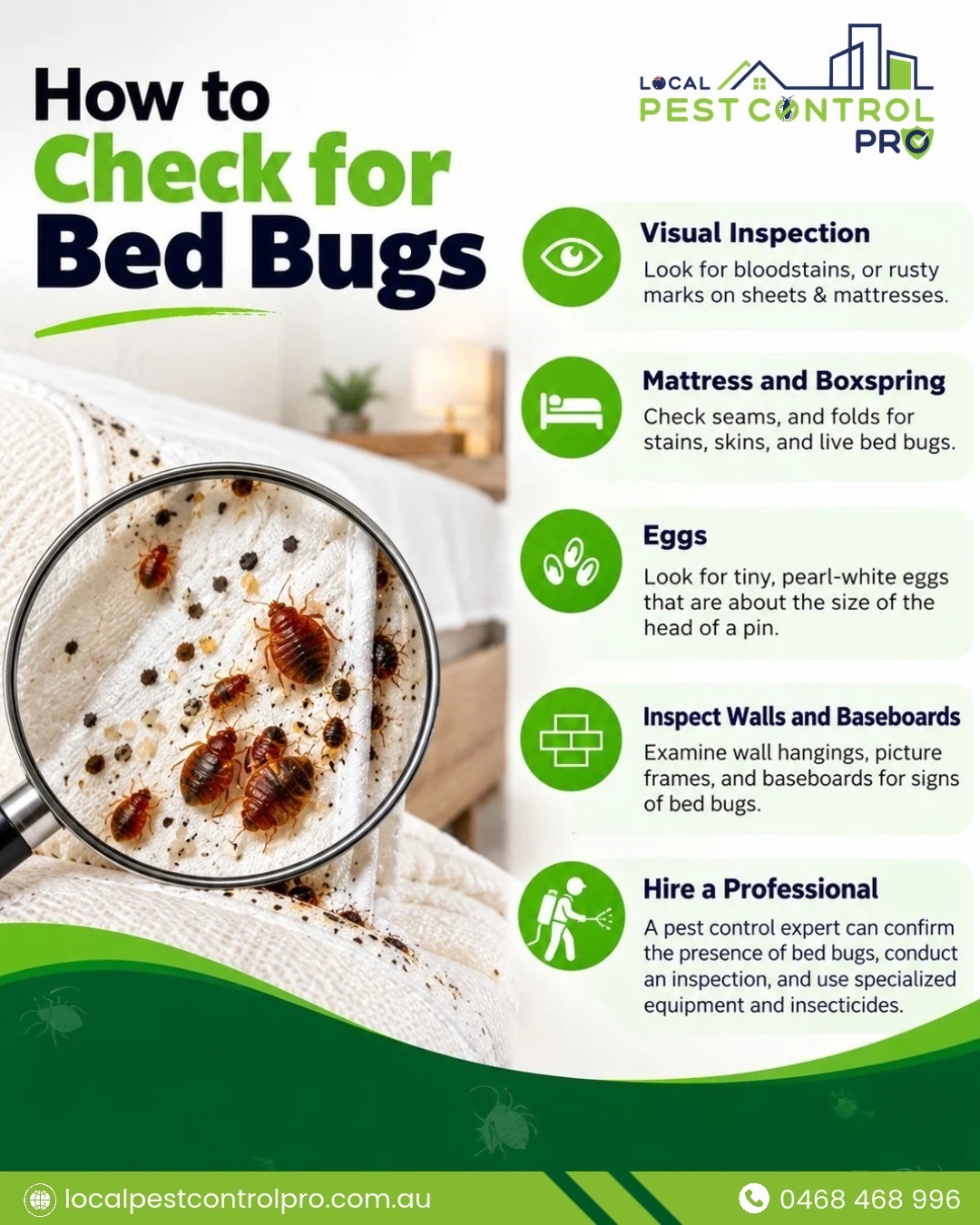
Bed Bug Inspection Helps Identify a Bed Bug Infestation
Bed bugs are small pests that can hide in mattresses, bed frames, upholstered furniture, and narrow cracks around the home. Because they are difficult to detect, an infestation may remain unnoticed until visible signs appear. A professional Bed Bug Inspection helps identify these pests, locate their hiding places, and determine the right steps to manage the problem.
Whether you have noticed unusual stains on your bedding or suspect bed bug activity after traveling, early detection can help prevent the infestation from spreading. Local Pest Control Pro can help you understand why you should inspect affected areas and seek appropriate pest management assistance.
What Is a Bed Bug Inspection
A Bed Bug Inspection involves examining sleeping areas, furniture, and nearby surfaces for live bed bugs and evidence of their presence. Common inspection points include mattress seams, headboards, bed frames, skirting boards, and furniture joints.
Professional inspections focus on identifying live insects, tiny eggs, shed skins, and dark spots that may indicate bed bug activity. These findings help determine whether an infestation is present and whether further treatment is necessary.
How Can Bed Bug Inspection Identify an Infestation
A thorough Bed Bug Inspection Service helps detect signs of an infestation through several important steps.
1. Checks Mattresses and Bedding
Bed bugs can hide in mattress seams, fabric folds, pillowcases, and bed frames. Inspecting these areas helps identify reddish stains, dark spots, shed skins, and live insects.
2. Identify Bed Bug Eggs and Shed Skins
Bed bug eggs are tiny, pale, and difficult to spot without careful examination. Inspectors also look for shed skins and other evidence of an active infestation.
3. Examine Furniture and Hidden Areas
Bed bugs can hide behind headboards, inside furniture joints, along skirting boards, and in small cracks near sleeping areas. Checking these locations helps identify potential hiding places beyond the mattress.
4. Supports Appropriate Treatment Planning
Once a professional identifies signs of bed bugs, they can recommend suitable control methods based on the affected areas and the extent of the infestation. Professionals may also recommend follow-up inspections to monitor results.
What Are the Common Signs of Bed Bugs
Recognizing the warning signs can help you decide when to arrange a Bed Bug Inspection.
* Bloodstains: Small reddish or rusty marks on sheets and pillowcases.
* Dark Spots: Tiny dark marks on mattresses, bed frames, or furniture.
* Shed Skins: Pale outer skins left behind as bed bugs grow.
* Small Eggs: Whitish eggs found in protected cracks and crevices.
* Live Bed Bugs: Small, flat, reddish-brown insects hiding around sleeping areas.
* Possible Bites: Itchy skin marks may occur, although bites alone cannot confirm bed bug activity.
Why Choose Professional Bed Bug Inspection
DIY inspections can help identify visible signs, but bed bugs may remain concealed in narrow gaps and inaccessible furniture spaces. Professional Bed Bug Detection can help locate suspected activity and determine the next steps.
When looking for ways to check for Bed Bugs in Melbourne, homeowners should carefully examine sleeping areas and seek professional help if signs persist or the source is unclear. Similar precautions apply when you need to check for Bed Bugs in Australia, particularly after traveling or bringing second-hand furniture into your home.
How Can Local Pest Control Pro Help
Local Pest Control Pro is your contact for bed bug inspection and pest management inquiries. A suitable assessment can help identify suspected bed bug activity, determine affected areas, and guide decisions about appropriate treatment.
If you are concerned about bed bugs in your home, visit localpestcontrolpro.com.au or call 0468 468 996 to discuss your concerns and enquire about available assistance.
A professional Bed Bug Inspection helps identify warning signs, locate potential hiding places, and determine whether you need further pest control measures. Inspecting mattresses, bed frames, furniture, and surrounding areas can help detect an infestation before it spreads.
If you suspect bed bug activity, avoid moving potentially infested belongings between rooms and seek appropriate guidance. Contact Local Pest Control Pro to enquire about inspection and bed bug management options for your property.
Frequently Asked Questions (FAQs)
1. How do I check for bed bugs at home?
Inspect mattress seams, bed frames, headboards, bedding, and nearby furniture for live insects, dark spots, shed skins, and tiny eggs.
2. What does a professional bed bug inspection include?
A professional inspection typically examines sleeping areas, mattresses, furniture, skirting boards, and nearby cracks for signs of bed bug activity.
3. Can bed bugs hide outside the mattress?
Yes. Bed bugs can hide in headboards, furniture joints, upholstered items, skirting boards, and small gaps near sleeping areas.